Key takeaways
- 186 new real-estate developers were registered in Dubai between January and mid-August 2026 — roughly ~25 arrivals per month — according to the Dubai Land Department.
- 3 Trakhees licences were issued specifically for Dubai Maritime City, a new coastal development front now taking shape.
- For off-plan buyers: more projects and more competitive payment plans — but also increased pressure on execution quality.
- A strong macro signal: Dubai keeps attracting fresh, diversified capital, far from a market dominated by 4–5 legacy players.
- The direct corollary for investors: developer selection becomes the key skill — track record, escrow funding, actual delivery rates.
What exactly did the DLD announcement say?
The Dubai Land Department registered 186 new real-estate development companies between January and mid-August 2026 — an average pace of 25 developer licences per month over the period.
Among those entries, 3 licences were issued by Trakhees, the regulatory authority for Dubai Maritime City's free-zone port area. That detail matters. Trakhees operates a separate regime from the standard DLD framework, with its own capital thresholds and approval procedures. Projects such as Kanyon, Orise, and Soulever show concretely how attractive this zone is to new entrants.
25New developer licences / month (Jan–Aug 2026) · DLD / Gulf News, August 2026Entry into Dubai's ecosystem is not open-door. The DLD requires a minimum capital threshold, a mandatory project escrow account, and RERA validation before any commercial launch. These safeguards explain why rising developer numbers do not signal a diluted regulatory framework — a distinction that matters when assessing counterparty risk (see also our analysis of Binghatti's escrow).
What the announcement reveals between the lines: a market long dominated by a dozen majors is broadening into a more diversified developer base. This creates new off-plan entry opportunities — but also calls for sharper developer evaluation. That is precisely what we structure for our clients through our curated projects.
Why 25 new developers per month right now?
Five factors converge in 2026 to make Dubai irresistible to new entrants. Each is powerful on its own. Together, they create a structural entry dynamic — not an opportunistic one.
End-user demand proven by the numbers
Off-plan sales in 2024–2025 hit all-time records, according to the Dubai Land Department. This is not speculation. High absorption rates mean real end-buyers — tenants, residents — are already in the market. A developer entering in 2026 starts from a validated base, not a bet.
3.9M residentsDubai population in 2026 · Dubai Statistics Center, 2026The city's population crosses the 3.9 million mark this year. The resulting structural rental pressure alone justifies new supply launches.
Macro fundamentals that lock in capital
Investors from India, the Gulf, and Israel route capital to Dubai precisely because 0% applies to rental income and capital gains. The dirham, pegged to the US dollar, eliminates currency risk.
The equation is simple: high net yield, stable currency, clean tax exit. Capital does not need to look further.
Fresh land unlocked by major masterplans
Dubai Maritime City, Palm Jebel Ali, and Dubai South are opening up substantial land reserves. This is regulated, bankable, available land — exactly what a new developer needs. Kanyon, Orise, and Soulever already illustrate that potential in Dubai Maritime City alone.
The reinforced RERA framework — with mandatory escrow accounts — removes the final barrier: buyer confidence. Developers know the rules protect both the purchaser and their own reputation.
What does this change in practice for investors?
186 new developers in seven months primarily represents a rebalancing of power in the buyer's favour. Competition among developers translates into more flexible purchase terms and a wider catalogue — but it also introduces a new risk that informed investors cannot ignore.
Over 200 off-plan projects are active simultaneously in 2026, according to Property Monitor. This unprecedented volume extends choice into zones previously underserved: Dubai Maritime City, Dubai Islands, Al Wasl, Jumeirah Garden City. In the mid-market, competitive pressure keeps new-build prices in check. In ultra-luxury, Palm Jumeirah, the Marina, and DIFC remain insulated from this pressure.
200+Active off-plan projects in Dubai · Property Monitor, Q2 2026Payment plans are becoming structurally more attractive. Structures such as 20/80, 40/60 post-handover, and developer-covered DLD fees (4%) are becoming standard in the mid-market segment — a direct cash-flow lever for investors financing from France, Belgium, or Canada.
Developer selection criteria for 2026
Most of the risk concentrates here. Among 186 new arrivals, a meaningful fraction has no completed project to its name. The challenge is not to avoid new entrants — it is to distinguish the well-capitalised ones from the rest.
| Criterion | Positive signal | Red flag |
|---|---|---|
| DLD escrow account | Registered and funded | Absent or partial |
| Track record | ≥1 project delivered on time | No deliveries |
| Financial structure | Declared capital ≥ 10% of project cost | Opaque or undisclosed |
| Trakhees / RERA | Active licence, verifiable number | Not found on DLD register |
| Local references | Known UAE banking partners | Unaudited offshore structures |
The article on Binghatti's escrow vs Moody's shows how an established developer documents its financial strength. That level of transparency is exactly what you should demand from any new entrant.
For Dubai Maritime City — where 3 Trakhees licences were just issued — projects like Kanyon, Orise, and Soulever provide a concrete benchmark for what due diligence should produce. Licence verification is public on the DLD register: a genuine developer accepts that check without friction.
Focus — Dubai Maritime City: why 3 Trakhees licences?
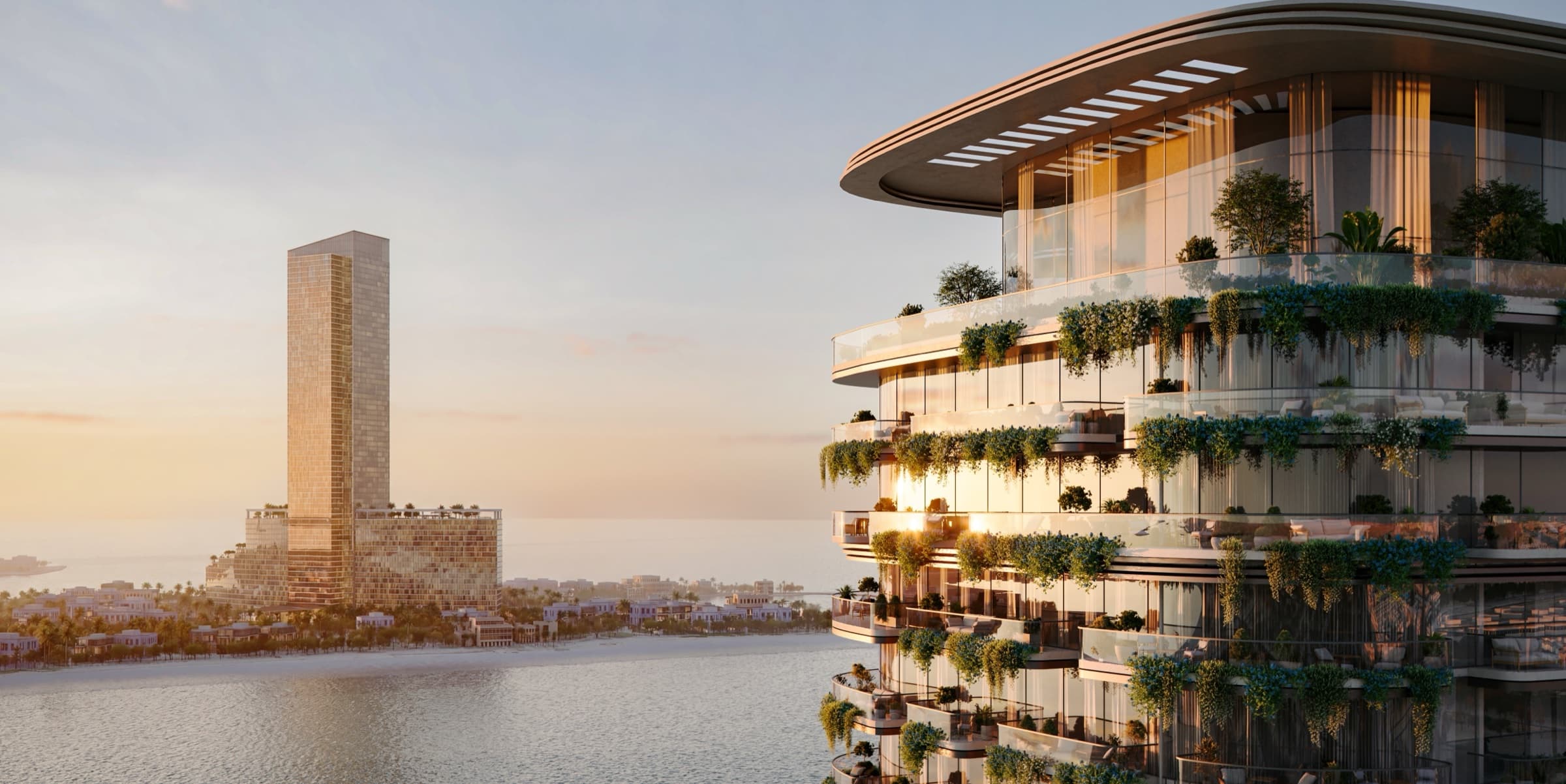
Dubai Maritime City is not an ordinary zone. These 249 hectares reclaimed from the sea, between Port Rashid and the historic centre, combine an active marina with a residential fabric in active densification.
3 developer licences were issued by Trakhees for Dubai Maritime City between January and August 2026 — a clear signal that a new residential phase is opening up in this maritime enclave.
Trakhees: a separate authority from the DLD
Trakhees is the regulatory authority of Ports, Customs and Free Zone Corporation (PCFC). It manages construction permits and developer licences in port free-zone areas, independently of the standard DLD process. Obtaining a Trakhees licence is more selective — which is why three simultaneous arrivals in a single zone over seven months is a meaningful signal.
The investment thesis
The location speaks for itself. Dubai Maritime City sits 10 minutes from Downtown and 12 minutes from the DIFC, with a waterfront that few residential districts can match at this price point.
6–7%Projected gross yields — Dubai Maritime City · Developer estimates, 2026Those yields remain to be confirmed at handover, but they align with averages observed in comparable densification zones. Several programmes are already on the market in the area: Kanyon, Orise, Soulever, and 31-Above illustrate the breadth of current supply.
The accelerated opening of Dubai Maritime City confirms that Dubai continues to activate new high-value residential districts — a strong argument for investors seeking entry before a zone reaches full maturity.
How to play this wave without making mistakes?
186 new developers in 7 months is a real opportunity — and a filter to apply without compromise. Upstream selection determines 80% of the final outcome: effective yield, on-time delivery, exit liquidity.
1. Choose the right developer
Established groups first. OMNIYAT/BEYOND, Emaar, Sobha, and Nakheel have documented track records, audited escrow accounts, and proven financing capacity. For new entrants, one simple rule: require at least 3 prior deliveries in the Gulf, with verifiable references. A developer with no regional history cannot compensate with an attractive payment plan.
The article on Binghatti and its AED 10.6B escrow shows how financial strength is measured in practice — not on a brochure.
2. Compare on net yield, not gross yield
The gross yield a developer advertises ignores service charges, vacancy, and management fees. A real net yield of 5.5–6.5% on a delivered project is worth more than a 9% gross yield promised on paper. Our net yield calculator lets you run the real numbers in 3 minutes.
3. Secure your entry and plan your exit
Buying at direct developer price — with no intermediary agency fee — immediately preserves 2–4% of margin. That is the model we apply across our partner projects.
From the moment you sign, identify your exit channel. An illiquid asset in an active market is still a risk. The Sell in 48h service delivers a firm off-market offer with no fees and no viewings — knowing that option before you buy means managing liquidity risk from day one.
5.5–6.5%Target net yield — established off-plan, Dubai 2026 · DLD / REIDIN 2026The Level8 verdict
186 new developers in seven months is not a signal of overheating. It confirms that Dubai remains, in 2026, the most dynamic real-estate market in the Gulf — backed by real demand, a robust regulatory framework, and an unmatched tax environment.
0% on rental income and capital gains, an AED pegged to the US dollar, and the Golden Visa accessible from AED 2M: this trio is structural, not cyclical. No European capital city offers all three simultaneously. (Source: UAE Federal Tax Authority)
A broader developer base benefits the informed buyer. When 25 new entities arrive every month, partner selection becomes the single most decisive investment act. A solid escrow balance, a delivery track record, and a DLD-compliant legal structure make all the difference — as the Binghatti escrow analysis illustrates.
186New developers registered (Jan–Aug 2026) · Dubai Land Department / Gulf News, August 2026Our read is clear: accelerate on well-sourced off-plan, stay demanding on the developer. Supply is widening. This is exactly the moment to raise selectivity — not to rush on a brochure. Every project we list passes that filter: direct partners, developer pricing, no markup.
Further reading
Three complementary reads from the Level8 journal:
- Binghatti Escrow Dubai 2026: AED 10.6B in Response to Moody's — Binghatti counters Moody's watch placement with AED 10.6B in escrow and 3 deliveries. What it means for Dubai off-plan in 2026.
- Etihad Rail Al Yalayis: The Station Reshaping South Dubai — The Etihad Rail Al Yalayis station opens 30 September 2026, two months ahead of schedule. What it changes for south-west Dubai investors.
- Lulu Island Abu Dhabi: Eagle Hills Awakens 400 Dormant Hectares — Eagle Hills launches development of Lulu Island, 400 ha facing Abu Dhabi's Corniche. What it means for investors in 2026.
FAQ
How do you verify the reliability of a new developer registered with the DLD in 2026?
The DLD requires every developer to meet a minimum capital threshold, hold a project escrow account, and obtain RERA validation before any commercial launch. You can check a project's escrow status directly on the RERA portal and verify its delivery history via Dubai REST — or through an adviser with access to Property Monitor data.
What tax applies to rental income for a francophone investor in Dubai?
The UAE applies 0% on rental income and real-estate capital gains. For a tax resident of France, Belgium, or Switzerland, Dubai-sourced income must still be declared in the country of residence under applicable tax treaties. Prior structuring with a France-UAE tax specialist lets you optimise the effective net tax position.
What gross rental yield can you expect on an off-plan apartment in Dubai in 2026?
Observed gross yields range from 5% to 8% depending on zone and property type, with emerging districts like Dubai Maritime City sitting at the top of that range. Net yield depends on service charges, occupancy rate, and the investor's home-country tax position.
Are post-handover payment plans reliable with developers who recently entered the market?
40/60 or 20/80 post-handover structures are governed by the DLD: collected funds must pass through an audited escrow account, and the developer can only access them in stages, certified by a RERA inspector. Risk is not zero with a new entrant, but the escrow mechanism is the primary regulatory safety net.
Does an off-plan purchase in Dubai Maritime City qualify for the Golden Visa?
A real-estate investment of at least AED 2M (approximately EUR 500,000) in a DLD- or Trakhees-approved property qualifies for the 10-year Golden Visa — including off-plan projects, provided the contract value reaches that threshold. Projects in Dubai Maritime City, governed by Trakhees, are eligible under the same criteria as standard DLD zones.
What impact do 186 new developers have on off-plan prices in 2026?
The multiplication of active projects — estimated at over 200 simultaneously by Property Monitor in Q2 2026 — puts competitive pressure on new-build prices in the mid-market segment, with developers frequently absorbing the 4% DLD fee. In ultra-luxury, prime zones such as Palm Jumeirah, DIFC, and the Marina remain largely insulated, supported by sustained international demand and controlled supply.