Key takeaways
- Lulu Island Abu Dhabi: Eagle Hills Properties (Mohamed Alabbar, founder of Emaar) confirmed on 25 August 2026 the development of this 400 ha artificial island, 500 m from Abu Dhabi's Corniche.
- Construction machinery is already visible on site — the first concrete sign of execution after more than 30 years of stalled projects dating back to 2008.
- The scheme targets a low-density community of up to 20,000 residents, connected by bridges to the Corniche and Mina Zayed, within the Abu Dhabi 2030 Plan framework.
- For investors, the early-mover window is open today — ahead of the official off-plan launch and any public price list. The profile is comparable to Saadiyat Island or Yas Island at their very inception.
What exactly did Eagle Hills confirm on 25 August 2026?
On 25 August 2026, Eagle Hills Properties announced the operational launch of Lulu Island's development. The National reported the announcement. This is not a letter of intent: construction equipment is visible on site, ending eighteen years of "ghost project" status since the island was first proposed in 2008.
Who is Eagle Hills? It is the private investment vehicle of Mohamed Alabbar, the founding figure behind Emaar. The firm has already delivered Ramhan Island and the Bvlgari Resort Dubai — both on schedule. The Alabbar name is itself a mark of execution credibility, in a market where sponsor track record remains the primary filter for buyers.
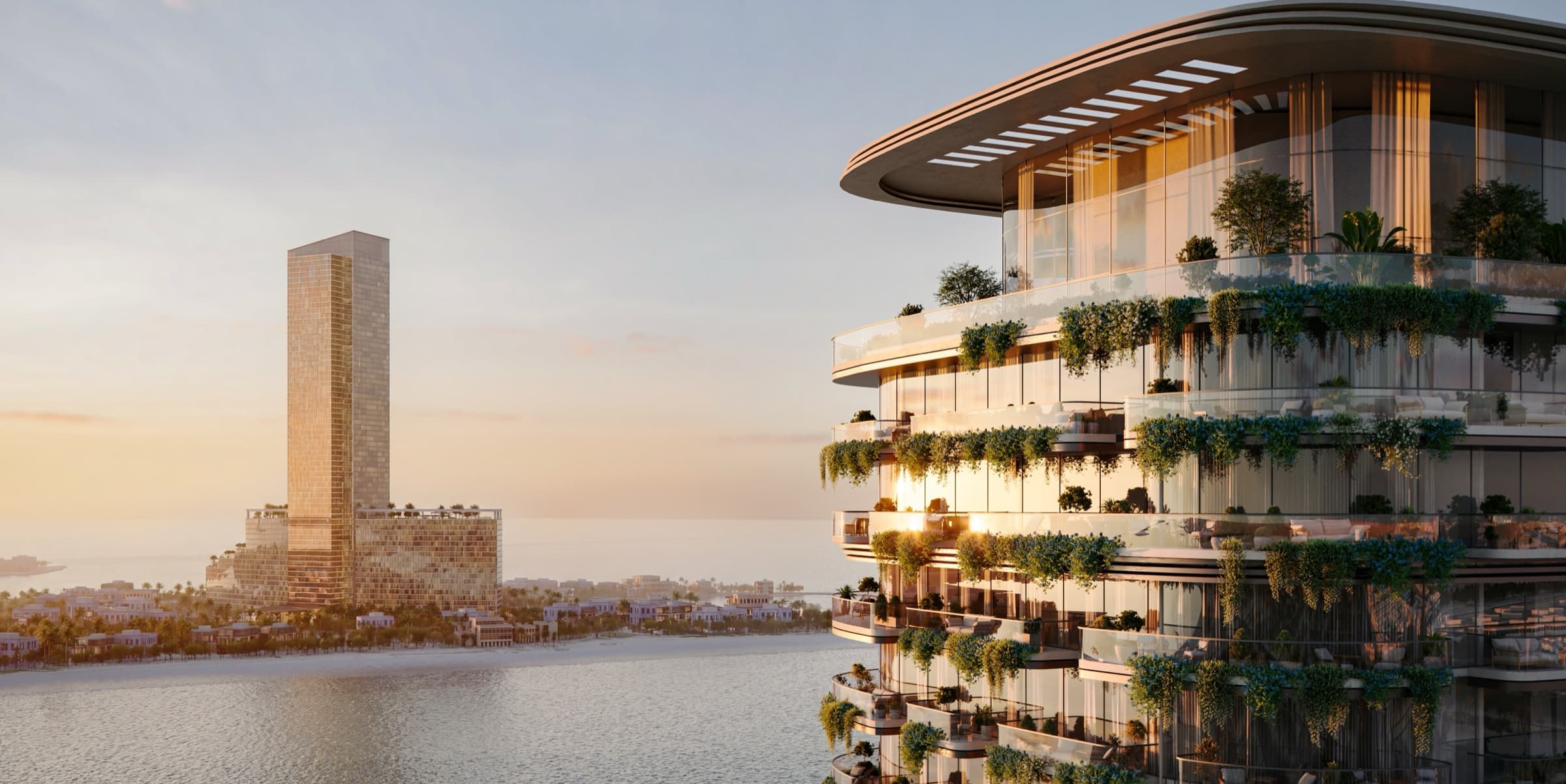
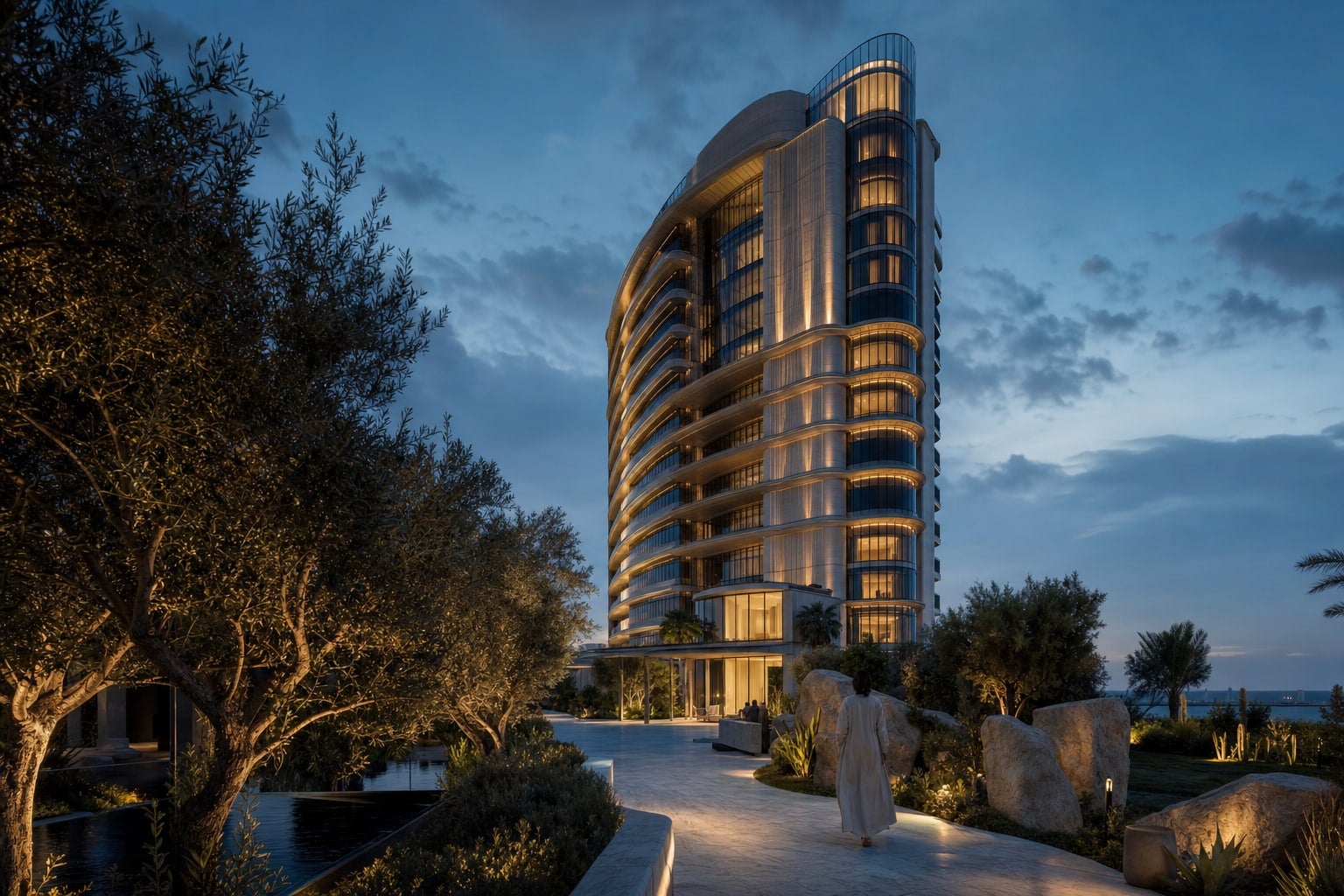
The announced programme centres on a low-density residential community, two bridges connecting the island to the Corniche and Mina Zayed, and a target capacity of 20,000 residents. The island sits within the Abu Dhabi 2030 framework, which identifies Lulu Island as a structural element of the capital's urban landscape.
20,000 residentsTarget residential capacity · The National, 25 August 2026The geography is decisive. At 400 ha and just 500 m from the waterfront — facing Abu Dhabi's financial district — this represents a land scarcity with no equivalent in the UAE's island supply.
Why this announcement matters now
Lulu Island is not a project that came out of nowhere. The Abu Dhabi Urban Planning Council explicitly identifies it in the Abu Dhabi 2030 Plan as a structural element of the capital's urban landscape. Thirty years of stasis did not erase that designation — they preserved it, on prime central waterfront, while the city developed around it.
The 2026 timing is not coincidental. Abu Dhabi has hit milestone after milestone between 2024 and 2026: the imminent Guggenheim opening, Saadiyat extensions, and Mubadala hub consolidation. These developments absorbed premium demand across existing peninsulas. Lulu Island arrives precisely when the last major virgin waterfront site in the central city has no obvious alternative.
The choice of Eagle Hills also changes the equation. The developer's track record — Ramhan Island and the Bvlgari Resort — brings execution credibility that previous sponsors could not claim. Abandoned projects leave scars in buyers' memories; a name like Mohamed Alabbar's erases them.
400 haTotal area — Lulu Island · The National, 25 August 2026The market signal is clear. When an operator of this calibre commits capital and machinery to an asset dormant for three decades, it validates a cycle. That is precisely the kind of momentum Abu Dhabi has institutionalised in its recent master plans.
What is the upside potential for an early mover?
An investor entering Lulu Island at launch is betting on a geographical differential unprecedented in Abu Dhabi: 500 m from the Corniche, versus 15–20 km at inception for Saadiyat and Yas Island. Both historical benchmarks show that this kind of entry translates into asset values doubling.
What Saadiyat and Yas Island demonstrated
Saadiyat Island saw residential prices more than double between the 2009 launch and 2024, according to REIDIN Abu Dhabi data. The ramp-up was gradual, then accelerated once the museums opened — Louvre Abu Dhabi in 2017, with the Guggenheim still forthcoming.
Yas Island followed a similar trajectory. The post-2015 catch-up was amplified by Ferrari World, Warner Bros. World and the Formula 1 circuit — each destination anchor compressed the value timeline.
Lulu Island stands apart from both precedents through its immediate proximity to Abu Dhabi's centre — 500 m from the Corniche — whereas Saadiyat and Yas were peripheral extensions at the time of their launch.
The early-mover window: short by design
Expected launch prices will sit below the official off-plan price list, accessible by invitation before public release. This window is structurally short — typically three to six months — before institutional and regional demand closes the gap.
5.5–7%Gross rental yield — Abu Dhabi waterfront (Saadiyat, 2026) · ADREC / Abu Dhabi DLD-equivalentFor investors already positioned in Dubai, this kind of early-mover arbitrage in a neighbouring capital — with the same 0% tax on capital gains — offers effective geographical diversification within the same UAE envelope.
What this means concretely for francophone investors
The tax framework is identical to Dubai's. The UAE applies the same federal regime across all seven emirates.
The UAE applies 0% tax on rental income and real estate capital gains for non-resident individual investors.
The 10-year Golden Visa remains accessible from AED 2M (~EUR 500,000) invested, whether in Abu Dhabi or Dubai. A buyer on Lulu Island faces no residency disadvantage compared to the Marina.
Buying remotely: what it involves
From France, Belgium, Switzerland or Canada, the process is exactly the same as for Dubai: notarised power of attorney, electronic signature, and a payment plan typically structured at 40/60 or 50/50 (pre-handover instalments / balance at key delivery).
40/60Standard UAE off-plan payment plan · Eagle Hills / UAE market practice 2026The Lulu vs mature Dubai projects trade-off
The real question is not Abu Dhabi versus Dubai — it is about the return profile you are targeting. A mature project like the Marina or the Palm delivers immediate rental yield of 5–7%. Lulu Island, still under construction, is a capital gain thesis over 5–7 years: enter at pre-launch pricing, exit once the completed neighbourhood has appreciated.
The two logics are complementary. This is precisely the kind of trade-off — immediate yield versus capital upside — that we structure for our clients, across our Dubai projects and the Abu Dhabi opportunities currently being structured.
Verdict: does Lulu Island deserve an allocation in 2026?
Yes — for a capital-gain-oriented investor with a 5–7 year horizon and a measured tolerance for execution risk. The combination is rare in the 2026 cycle. Mohamed Alabbar — builder of the Burj Khalifa and Creek Harbour — is leading a site listed in the Abu Dhabi 2030 Plan: 500 m from the Corniche, across 400 ha of untouched land.
This kind of early-mover window has not existed in Abu Dhabi since the launch of Saadiyat Island. The market rewards early entries with resale premiums that materialise as soon as subsequent phases go on sale.
Honest caveats
No detailed master plan, no official price grid, and no delivery timeline have been published at this stage. This remains a pre-positioning window, not a fully scheduled and costed investment. The final allocation decision should be made once project documents are available.
The UAE applies 0% tax on rental income and capital gains for non-resident individual investors — a structural advantage that applies regardless of which project you choose.
What we recommend
Three concrete steps to position yourself without overexposure:
- Join the pre-launch access list — the best allocations go before public marketing opens.
- Calibrate your target net yield using our calculator by running several entry-price scenarios.
- Structure your France-UAE tax setup (or Belgium, Switzerland, Canada) in advance via our services, before official documents are released.
For Abu Dhabi developments with comparable catalysts — Sphere on Yas Island, expanding Saadiyat — our article on Sphere Abu Dhabi provides a useful comparison point on timelines and price dynamics.
Further reading
Three complementary reads from the Level8 journal:
- Abu Dhabi Livability by Design: the new mandatory filter for master plans — Abu Dhabi makes a quality-of-life filter mandatory across its master plans. Direct impact on off-plan project values and premium rental yields.
- Arada Sharjah: AED 5B in Australia, a signal for UAE off-plan — Arada (Sharjah) commits AED 5B to Australia's Gold Coast. What this international expansion means for UAE off-plan buyers.
- Green Community Dubai Investment Park: the 2026 investor guide — Green Community DIP in 2026: price per sqft, 5–7% yields, Golden Visa thresholds and the Al Maktoum effect. What each budget bracket can buy.
FAQ
What is the risk profile of investing in Lulu Island in 2026?
The project is in its operational launch phase — machinery confirmed on site on 25 August 2026 — but no public price grid or off-plan sales permit has been published. The early-mover risk is real: eighteen years of failed projects means you should verify the DLD escrow arrangement and the contractual delivery schedule before committing. The Eagle Hills name (Ramhan Island, Bvlgari Resort Dubai delivered on time) is the primary sponsor-risk mitigant.
How does taxation work for a francophone investor buying in Abu Dhabi?
Abu Dhabi levies no local tax on rental income or real estate capital gains. For a French, Belgian or Swiss tax resident, income remains declarable in the country of residence under domestic rules — the 1989 France-UAE tax treaty avoids double taxation but does not exempt French taxpayers from their DGFiP reporting obligations. Advance tax structuring with a specialist adviser is essential before signing.
Does buying on Lulu Island qualify for the UAE Golden Visa?
The 10-year Golden Visa is accessible to property investors whose asset value reaches a minimum of AED 2M (approximately EUR 500,000), whether the property is delivered or off-plan. Abu Dhabi applies the same federal criteria as Dubai. Final eligibility depends on Lulu Island's freehold classification, which should be confirmed with the Abu Dhabi Department of Municipalities and Transport when sales open.
What gross rental yields can be expected on a residential island of this type in Abu Dhabi?
On comparable Abu Dhabi islands — Saadiyat and Al Reem — REIDIN records gross yields of 5% to 7% depending on property type and acquisition year. Lulu Island, at launch stage, has no market data of its own yet. Projections remain estimates and will depend on the final programme density, the residential-hotel mix, and the opening date of key amenity anchors.
How is an Eagle Hills off-plan payment plan typically structured?
Eagle Hills typically offers payment plans spread across the construction period, with a reservation deposit (usually 10–20%), construction-milestone instalments, and the balance due at handover. Funds are held in an escrow account supervised by the relevant Abu Dhabi authority — a legal requirement for all off-plan projects in the UAE. The definitive schedule for Lulu Island had not been published as of 27 August 2026.
What is a realistic exit strategy for an early-mover buyer on Lulu Island?
Two scenarios emerge from Abu Dhabi's island precedents: an off-plan resale before handover, capturing the price differential between launch and the mature secondary market (Saadiyat posted a doubling between 2009 and 2024 per REIDIN), and long-term rental hold once amenities are operational. Secondary market liquidity will remain limited before the two connecting bridges to the Corniche and Mina Zayed are delivered and the community reaches a critical resident mass.