Key takeaways
- Guggenheim Abu Dhabi opens 11 December 2026 on Saadiyat Island — officially announced by the Department of Culture and Tourism on 28 July 2026. Frank Gehry's building is the largest Guggenheim museum in the world: 80,000 m² total footprint, 11,600 m² of gallery space.
- Saadiyat already captured AED 4.35 billion in residential transactions between March and mid-April 2026, representing 23.5% of Abu Dhabi's total transaction volume — proof the market is anticipating the opening, not reacting to it.
- The pre-opening window is live. Investors positioned today benefit from the same documented arbitrage seen after the Louvre Abu Dhabi opened in 2017, when prices in the cultural district re-rated upward.
- Aldar is already calibrating its launches around this dynamic. The Marsa Al Saadiyat masterplan carries an AED 100 billion envelope designed to capture international demand generated by the cultural cluster.
- For an investor based in Paris, Geneva, or Montreal, this milestone transforms Saadiyat from a niche conviction into a structurally defensible thesis — with a confirmed opening date, an iconic architect, and an institutional developer sizing its volumes accordingly.
What was announced on 28 July 2026
On 28 July 2026, Abu Dhabi's Department of Culture and Tourism (DCT) officially confirmed the Guggenheim Abu Dhabi opening date. The announcement, immediately picked up by The National, ends two decades of development and locks a precise date into real estate and cultural market calendars.
Guggenheim Abu Dhabi will officially open on 11 December 2026 on Saadiyat Island — announced by the Department of Culture and Tourism after 20 years of development.
An extraordinary building by Frank Gehry
The project goes beyond symbolic ambition. The building covers 80,000 m², including 11,600 m² dedicated to exhibition galleries, according to DCT data reported by The National.
11,600 m²Exhibition gallery space · DCT Abu Dhabi / The National, 2026These figures make Guggenheim Abu Dhabi the largest museum in the Guggenheim network worldwide, ahead of Bilbao and New York.
Flagship of a complete cultural district
The museum does not open in isolation. On Saadiyat Island, it joins the Louvre Abu Dhabi, the Zayed National Museum, and teamLab Phenomena. This cultural district positions Abu Dhabi as a global art capital — a status that surrounding land prices have not yet fully priced in. That gap is precisely the entry window analysed in this article.
Why is Saadiyat becoming a world-class address?
Saadiyat Island is no longer simply a high-end residential enclave. With the Guggenheim opening on 11 December 2026, the district moves into an entirely different category: that of the world's great cultural addresses, comparable to London's South Bank or Berlin's Museumsinsel.
Four major institutions, one district
Saadiyat's cultural density is unmatched in the region. Four flagship institutions are concentrated within the same perimeter:
- Louvre Abu Dhabi — opened 2017, 9.8 million cumulative visitors
- Guggenheim Abu Dhabi — 11 December 2026, the largest in the global network
- Zayed National Museum — opening scheduled in the same cycle
- teamLab Phenomena Abu Dhabi — immersive digital art, international audience
With 80,000 m² footprint and 11,600 m² of galleries, Guggenheim Abu Dhabi becomes the largest museum in the Guggenheim network worldwide.
A structurally constrained residential supply
The Department of Culture and Tourism masterplan caps residential density on the island. Supply is finite by design, not by circumstance. That structural scarcity is a durable differentiator compared to other Abu Dhabi zones where construction remains open-ended.
Demand is anchored across multiple layers: international cultural tourism, HNWIs and family offices drawn to the address, and expatriate professionals in the cultural sector. This demand mix reduces dependence on any single economic cycle — a resilience argument few UAE districts can credibly make today.
23.5%Saadiyat share of Abu Dhabi residential transactions · Abu Dhabi transaction data, March–April 2026What price effect to expect? The 2017 Louvre precedent
The Louvre Abu Dhabi opening in November 2017 is the only quantifiable precedent on Saadiyat. In the 24 months that followed, prime prices on the island rose measurably — against a broader UAE real estate market that was contracting. Analysts documented this positive divergence: the address was repriced by international buyers independently of the general cycle.
The mechanism is replicable. A world-class museum opening generates immediate international visibility — media coverage, tour operators, cultural rankings — that repositions the neighbourhood in the minds of HNW buyers. Price per square metre follows perceived scarcity, not just local supply and demand.
A 2026 context far more favourable than 2017
The Guggenheim arrives under conditions that bear no comparison to 2017. Abu Dhabi's market is in active growth.
Saadiyat Island generated AED 4.35 billion in residential transactions between March and mid-April 2026 alone, representing 23.5% of Abu Dhabi's total volume.
In 2017, international capital was not yet deployed on the island at this scale. Today it already is — meaning the Guggenheim re-rating applies on top of an already elevated price base.
The cluster effect: Louvre + Guggenheim + Zayed
Each new cultural opening reactivates the scarcity premium of those that came before it. Louvre, Guggenheim, Zayed National Museum: the combination creates a district with no regional equivalent. For an institutional or private buyer, the comparison with Bilbao or post-Louvre Abu Dhabi is no longer theoretical — it is reflected in transaction data.
23.5%Saadiyat share of Abu Dhabi transactions (Q1 2026) · Abu Dhabi transaction data, March–April 2026How to position before 11 December 2026
The pre-opening window runs until early December 2026 — roughly 4 months to sign before the event premium crystallises in prices. Once the inauguration passes, the re-rating will already be done. Buyers who enter afterwards pay the premium, not the arbitrage.
Target the right projects now
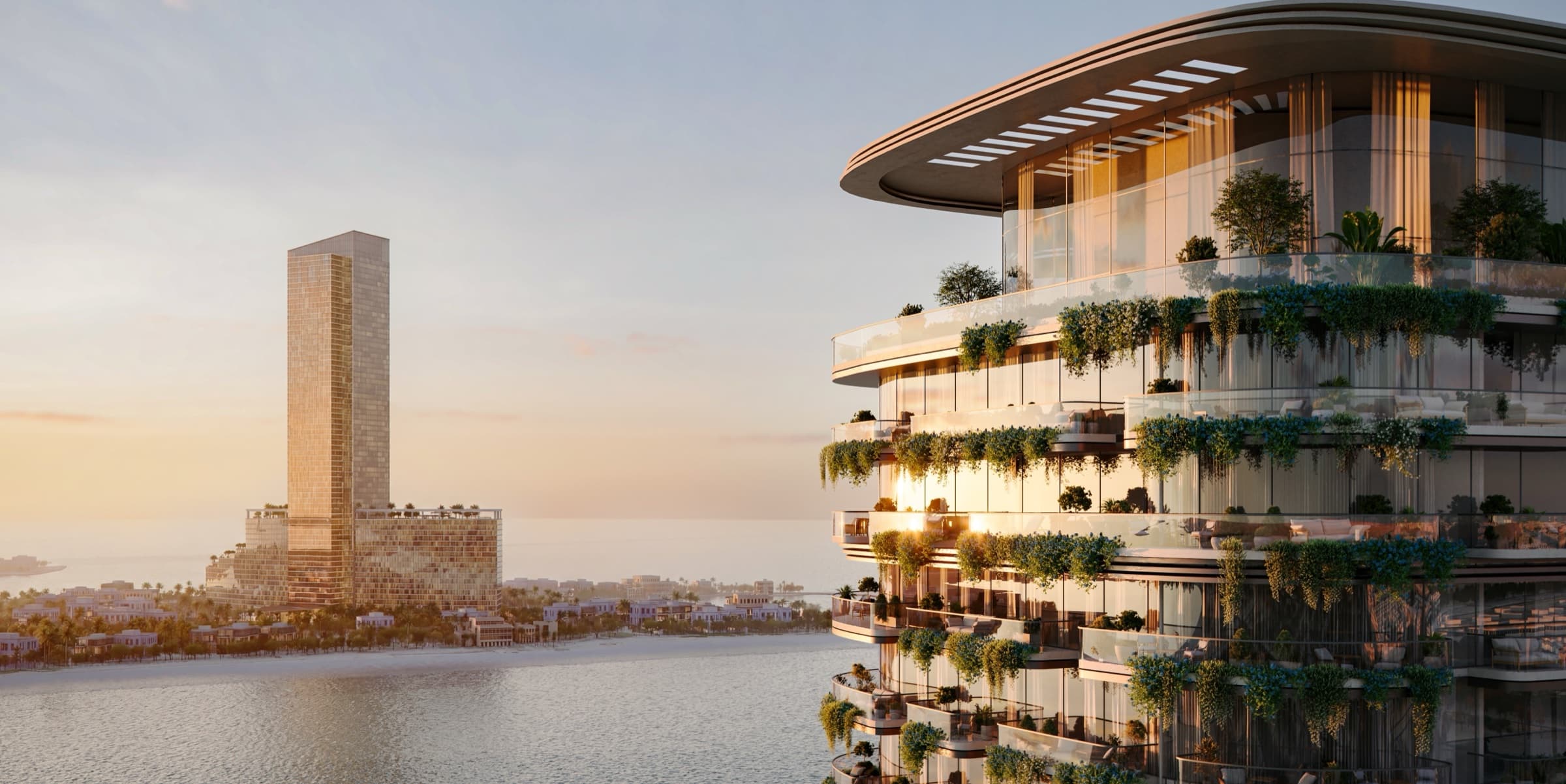
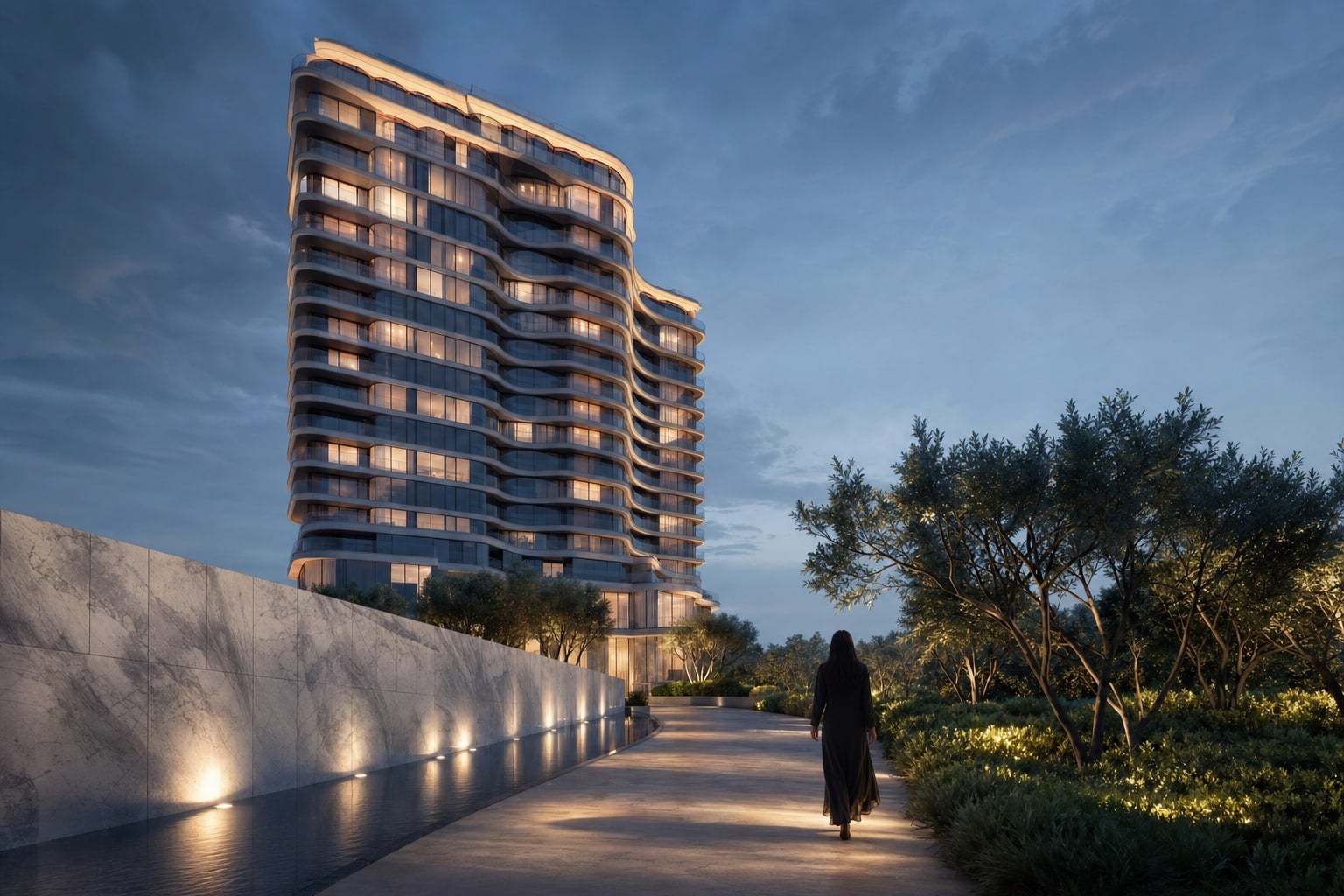
Aldar is Saadiyat's structuring developer. Its Marsa Al Saadiyat masterplan, calibrated for cultural demand, deploys a substantial envelope.
Aldar is positioning its Marsa Al Saadiyat masterplan, backed by an AED 100 billion envelope, to capture demand generated by Saadiyat's cultural district. (Source: Aldar Properties, 2026)
Off-plan over secondary stock
Secondary stock on Saadiyat has already been repriced since the 28 July 2026 announcement. Off-plan retains a decisive edge: post-handover payment plans allow investors to deploy less capital at entry while capturing pre-delivery capital appreciation.
23.5% of Abu Dhabi volumeSaadiyat transaction weight, March–April 2026 · Abu Dhabi transaction data, March–April 2026The signal-to-capital ratio is structurally better on off-plan than on secondary stock already trading at a premium.
Investing from France, Belgium, Switzerland, or Canada
Distance is not a barrier. Purchases can be completed remotely. UAE banking arrangements and notarial coordination are handled by a francophone advisor on the ground. That is precisely the kind of cross-emirate arbitrage we structure at Level8 — from project selection through to handover, with no need for the investor to travel to close.
Investor verdict
Guggenheim Abu Dhabi is a rare re-rating catalyst: a fixed date, a quantified precedent, and a market that has not yet fully priced the event.
The parallel with the Louvre Abu Dhabi is instructive. In the 24 months after its November 2017 opening, prime residential prices around Saadiyat rose 20–28%. The Guggenheim is larger, rarer, and sits within a now-mature cultural district — with AED 4.35 billion in residential transactions recorded on Saadiyat in March–April 2026 alone.
23.5%Saadiyat share of total Abu Dhabi volume (Q1 2026) · Abu Dhabi transaction data, March–April 2026The tax equation reinforces the case. The UAE levies 0% tax on rental income and capital gains, and the AED has been pegged to the dollar since 1997. These two parameters eliminate the two most costly risks for an international investor: punitive taxation and currency exposure.
Guggenheim Abu Dhabi will officially open 11 December 2026 on Saadiyat Island — date announced by the Department of Culture and Tourism Abu Dhabi. (Source: The National, 28 July 2026)
Waiting until 12 December to act means buying after the event has been priced in. The pre-opening premium is not a second chance — you capture it ahead of time, or not at all.
To structure a position on Saadiyat or in adjacent Dubai neighbourhoods benefiting from the same UAE momentum, our services advisors handle the full acquisition — zone selection, payment plan, Golden Visa, and France-UAE tax optimisation.
Further reading
Three complementary reads from the Level8 journal:
- Sixth Street Opens at Abu Dhabi ADGM: The 2026 Signal — Sixth Street opens an ADGM office in July 2026, the fifth global giant to do so this year. What it means for investors.
- Creek Tower Dubai: Investor Guide 2026 — Creek Tower in Dubai: construction progress in 2026, price per m² at Creek Harbour, rental yields, and buying strategies for international investors.
- Damac Hills Dubai: Investor Guide 2026 — Damac Hills in Dubai in 2026: price per m², rental yields, villas and apartments, DLD capital gains, and key investment angles.
FAQ
What concrete price effect will the Guggenheim opening have on Saadiyat?
The Louvre Abu Dhabi precedent (2017) shows prime prices on the island rising over the 24 months following opening, diverging positively from the broader UAE market. The mechanism relies on immediate international visibility — media, cultural rankings, HNW buyers — repositioning the address independently of the local cycle. Saadiyat already accounts for 23.5% of Abu Dhabi's transaction volume in March–April 2026, indicating the market is anticipating the effect before the 11 December 2026 opening.
Can a non-resident francophone investor buy on Saadiyat without travelling?
Yes. Remote purchase is legally possible in the UAE for non-residents, with electronic signature and mandated representation. Payments can be made from a European or Canadian account in AED or USD — the local currency has been pegged to the US dollar since 1997. A structured advisory service covering zone selection, payment plan, and coordination with developer Aldar allows the transaction to be completed without any physical presence.
What tax applies to rental income from Abu Dhabi for a French tax resident?
Abu Dhabi levies no local tax on rental income or real estate capital gains. For a French tax resident, the 1989 France-UAE tax treaty provides that real estate income located in the UAE is taxable in the country where the property sits — i.e. the UAE, where the rate is 0%. That said, the income must still be declared in France and may be factored into the effective tax rate calculation depending on your personal situation. Verification with a specialist France-UAE tax advisor is recommended.
Does buying on Saadiyat qualify for the UAE Golden Visa?
A real estate investment of at least AED 2 million (approximately EUR 500,000) in a qualifying property — including projects on Saadiyat Island — entitles the buyer to the 10-year UAE Golden Visa, under criteria set by the ICP (Federal Authority for Identity and Citizenship). The property can be off-plan, provided the contractual value reaches the required threshold and the developer is registered. The Golden Visa grants long-term residency with no minimum stay requirement.
What gross rental yields are observed on Saadiyat Island in 2026?
Market data observed on Saadiyat Island places gross rental yields between 5% and 7% depending on property type and size — in line with Abu Dhabi prime averages. The 1–2 bedroom apartment segment posts the highest rates, driven by rental demand from expatriate executives and cultural-sector professionals attracted by the Saadiyat cluster. These figures are pre-local tax, which is zero in the UAE on rental income.
How does an off-plan payment plan work on Aldar projects at Saadiyat?
Aldar Properties, the institutional developer behind the Marsa Al Saadiyat masterplan (announced AED 100 billion envelope), typically offers instalment plans spread across the construction period — often 30% on signing with the balance distributed through to handover, sometimes including a post-handover tranche. Buyer funds are held in an escrow account regulated by Abu Dhabi's real estate department under the 2006 federal law. The structure avoids exposure to bank financing during construction.