Key takeaways
- Marsa Al Saadiyat, Aldar's AED 100B (USD 27.2B) masterplan, was officially launched on 22 July 2026 on Saadiyat Island, Abu Dhabi — the largest single residential launch the island has ever seen.
- The project covers 6.4 million sqm with 8 km of waterfront, capacity for 58,000 residents, and Abu Dhabi's largest marina (350 berths).
- An underground Etihad Rail station is integrated into the masterplan, providing direct Abu Dhabi–Dubai connectivity in the medium term.
- Off-plan sales begin in H2 2026, with infrastructure works launching in Q3 2026 — an early entry window ahead of broad public marketing.
- Market backdrop: Saadiyat apartment prices have reached AED 43,100/sqm (+21% year-on-year, Knight Frank), while Abu Dhabi real estate transactions surged to AED 117B in H1 2026 (+112% in value), according to the DMT.
- Investment qualifies for the Golden Visa from AED 2M, adding appeal for buyers from France, Belgium, or Canada.
What exactly is Marsa Al Saadiyat?
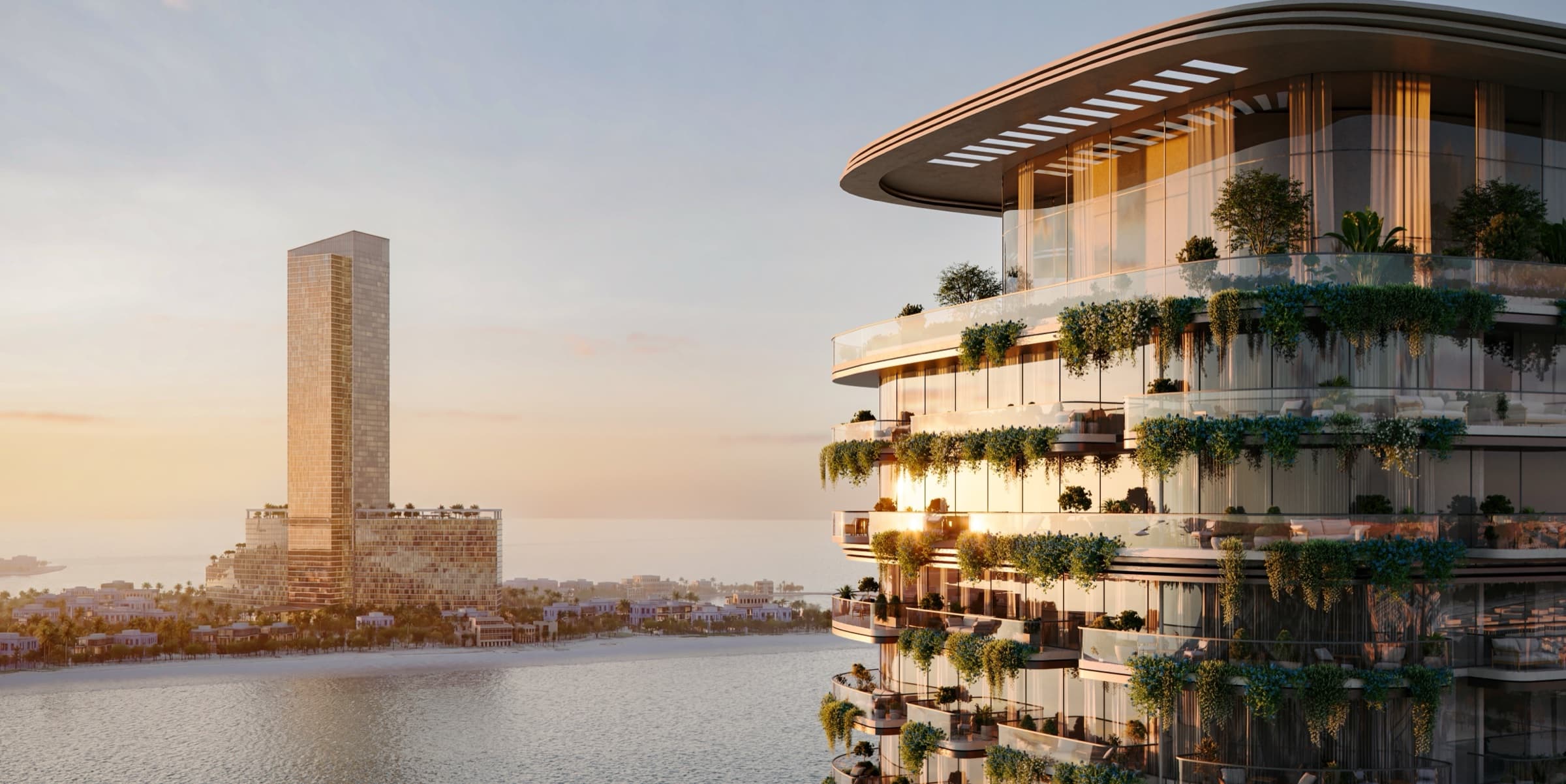
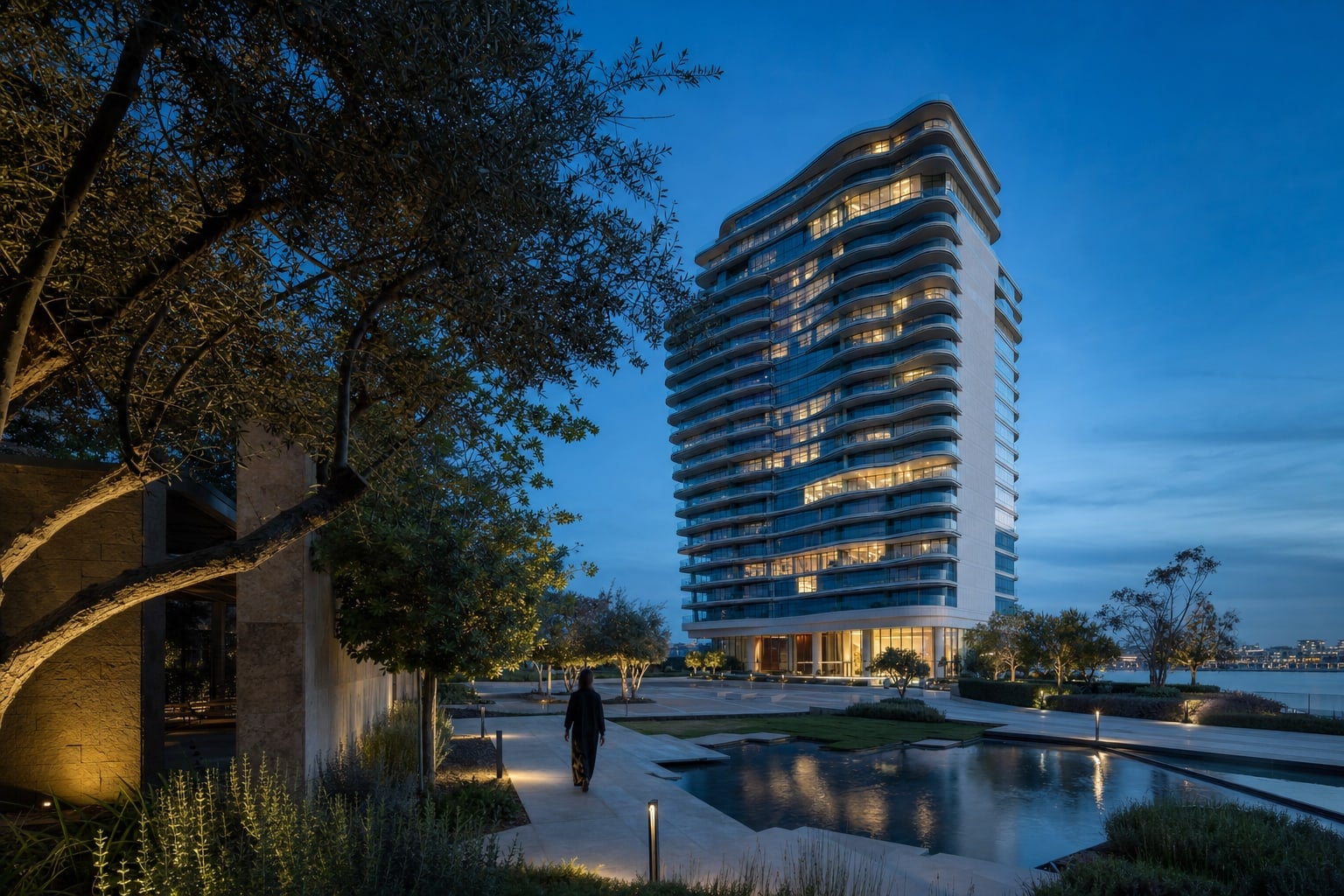
On 22 July 2026, Crown Prince Sheikh Khaled officially launched Marsa Al Saadiyat: a masterplan by Aldar Properties representing AED 100 billion (USD 27.2B) of development across 6.4 million sqm and 8 km of waterfront on Saadiyat Island.
This is the largest residential project Abu Dhabi has ever announced in a single release. Aldar, listed on the Abu Dhabi Securities Exchange, is the sole developer — a strong financial signal for off-plan buyers.
Programme components
The mix is deliberately broad: waterfront villas, apartments, branded residences, hotels, and retail space. At full build-out, the project targets a permanent population of over 58,000 residents.
350Marina — berths · The National, 22 July 2026The marina will be the emirate's largest. It anchors the project's identity as a premium nautical address — with a direct bearing on rental values for waterfront units.
Built-in connectivity
One structural detail that is easy to underestimate: an underground Etihad Rail station is embedded in the masterplan. Saadiyat will connect directly to the UAE's national rail network. This positions the project within a regional logic, not merely an island one — comparable in ambition to the major Dubai masterplans covered in our article on Emaar's AED 200B mega-project.
Off-plan commercial launches are expected in H2 2026.
Why is this launching now?
The timing is deliberate. Abu Dhabi is moving through an exceptionally strong absorption cycle in 2026. Aldar has chosen this moment to finalise the Saadiyat Island masterplan.
Abu Dhabi real estate transactions reached AED 117 billion in H1 2026, up 112% in value year-on-year — a market absorbing supply as fast as it comes to market.
On Saadiyat Island itself, price pressure confirms the trend.
AED 43,100/sqm (+21% year-on-year)Saadiyat Island apartment prices · Knight Frank Abu Dhabi Residential Review 2026This figure points to a market already under pressure — before Marsa Al Saadiyat sales have even opened. The Jefferies UAE cycle note from June 2026 reaches the same conclusion: Abu Dhabi is leading the UAE's current acceleration phase.
Programmed scarcity of waterfront land
Marsa Al Saadiyat represents the last available waterfront plots on the island. Once this perimeter is sold, seafront land on Saadiyat becomes structurally scarce. The mechanics are well understood. On constrained island markets, each launch wave reduces remaining stock and supports prices on already-delivered units.
The H2 2026 off-plan sales opening is therefore a point of entry ahead of broad public marketing — the window where launch prices are still set by the developer, not by secondary demand. This is exactly the kind of arbitrage we structure for our clients through our current projects.
What does the Etihad Rail station actually change?
The announcement of an Etihad Rail station integrated into the Marsa Al Saadiyat masterplan is not a planning footnote. It is a category shift for the island.
Abu Dhabi–Dubai in 30 minutes: the threshold that changes everything
The Etihad Rail network is currently rolling out its passenger component. The official target is an Abu Dhabi–Dubai journey of around 30 minutes. At that travel time, Saadiyat Island moves outside the Abu Dhabi perimeter and into Greater UAE. A Dubai-based resident can live there full-time. Rental and purchase demand expands mechanically to an additional 3.6 million active workers.
TOD: the documented premium on hub assets
Transit-oriented development (TOD) is one of the few value-uplift mechanisms documented across multiple markets. Assets within 800 m of an intermodal hub show a 15–25% premium per square metre over a five-year horizon, based on Knight Frank analysis of comparable markets (Singapore, Dubai Marina, Riyadh Metro).
+15–25%Estimated TOD premium — assets within 800 m of a hub · Knight Frank Research, comparable markets 2024-2026Saadiyat Island had no station integrated into a residential project until now. This is an absolute first for the island. Combining waterfront access, cultural density (Louvre, Guggenheim, Natural History Museum) and rail connectivity produces an asset profile that is rare across the MENA region.
A strategic shift for the investor
An apartment in Marsa Al Saadiyat is no longer a pure bet on Abu Dhabi. It targets a rental and buyer pool that is today choosing between Dubai and Abu Dhabi — and that 30 minutes by rail can tip toward Saadiyat.
Why does this matter for international investors?
For investors based in France, Belgium, Switzerland, or Canada, Marsa Al Saadiyat checks several structural boxes — well beyond the headline effect.
0% tax on rental income and capital gains in the UAE, regardless of nationality. This is a straightforward fiscal advantage, not conditional on residency status — one that Paris, Brussels, and Geneva cannot match on their own real estate markets.
AED 2MGolden Visa real estate threshold · u.ae — official UAE portal, 2026With entry prices observed from AED 2M to 2.5M on Saadiyat off-plan phases, Golden Visa eligibility is directly achievable through Marsa Al Saadiyat. The ten-year residency opens access to the local banking system, regional mobility, and a recognised tax-optimisation base.
The AED has been pegged to the US dollar since 1997. For a portfolio denominated in EUR, CHF, or CAD, this is a natural hedge against currency volatility — with no hedging costs.
Staggered payment plans tied to construction progress (typically 60/40 or 70/30) spread disbursement over two to four years. This is the key mechanism for an international buyer who does not want to commit full capital at signing.
The allocation decision between an Abu Dhabi waterfront like Marsa Al Saadiyat and a Dubai off-plan project turns on the yield and liquidity profile of each asset — exactly what we structure case by case through our advisory services.
Saadiyat or Dubai waterfront: where to allocate?
Saadiyat Island deserves a place in any regional real estate portfolio. Land scarcity is real. Prices at AED 43,100/sqm are up 21% year-on-year. The cultural anchors — Louvre, Guggenheim, Zayed National Museum — create structural premium residential demand. It is a serious wealth-preservation asset.
But Dubai remains the core portfolio holding for investors seeking yield and liquidity.
| Criteria | Saadiyat Island | Dubai waterfront |
|---|---|---|
| Observed gross yield | 4–5% | 5–8% |
| Secondary market liquidity | Moderate | High |
| Land scarcity | High | Moderate |
| Golden Visa threshold | From AED 2M | From AED 2M |
| Rental turnover | Slow (premium residential) | Fast (Marina, Palm, Islands) |
Palm Jumeirah, Dubai Marina, Dubai Islands: these three zones combine market depth, high rental turnover, and direct-developer off-plan supply — accessible with no agency fee through our projects.
Recommended allocation: 70–80% in core Dubai for yield and liquidity, 20–30% in Saadiyat for long-term diversification. This split optimises both immediate cash flow and capital preservation over ten years.
Before deciding, run your actual net yield through our calculator — the charge differential between Abu Dhabi and Dubai can shift net yield by 0.8 to 1.2 percentage points.
Further reading
Three complementary pieces from the Level8 journal:
- Dubai Creek: which sub-zone to invest in for 2026? — A data-driven comparison of Dubai Creek's four sub-zones in 2026: price per sqm, rental yields, and delivery maturity.
- Expo City Dubai: investing in post-Expo 2020 real estate — Expo City Dubai in 2026: prices, rental yields, free zone status, and comparison with Dubai South and Creek Harbour.
- Boulevard Point Downtown Dubai: the secondary market play — Investment analysis of Boulevard Point Downtown Dubai in 2026: price per sqft, Burj Khalifa view premium, yields by tier, and resale liquidity.
FAQ
When exactly do Marsa Al Saadiyat off-plan sales open?
Commercial launches are planned for H2 2026, with infrastructure works beginning in Q3 2026. This window precedes broad public marketing: prices are still set by Aldar, not by secondary market demand.
What is the minimum investment for the Golden Visa on Saadiyat Island?
A real estate investment of at least AED 2 million (approximately EUR 500,000) in a UAE property — including Abu Dhabi — qualifies for the 10-year Golden Visa. This threshold applies to off-plan purchases as well as completed properties, provided the amount paid exceeds AED 2M at the time of application.
How do Saadiyat Island prices per sqm compare with Dubai?
Saadiyat Island apartments reached AED 43,100/sqm in 2026, up 21% year-on-year according to Knight Frank. This level remains below Dubai's premium addresses (Palm Jumeirah, DIFC), leaving documented catch-up potential — particularly once the Etihad Rail station is operational.
What tax applies to rental income earned in Abu Dhabi for a French tax resident?
The UAE levies no tax on rental income or real estate capital gains. For a French tax resident, the France-UAE tax treaty of 19 July 1989 provides that real estate income is taxable in the state where the property is located: Abu Dhabi. French taxation is therefore avoided on these flows, but each investor's personal situation should be verified with a tax adviser.
What is the typical payment structure for an Aldar off-plan purchase?
Aldar generally offers staggered payment plans tied to construction progress, with a tranche at signing (often 10–20%), milestone payments linked to build completion, and the balance due at handover. Funds paid before delivery are held in an escrow account regulated by the Abu Dhabi Department of Municipalities and Transport (DMT), in line with UAE off-plan buyer protection law.
What concrete impact will the Etihad Rail station have on unit values?
Knight Frank analysis of comparable markets (Singapore, Dubai Marina, Riyadh Metro) documents a 15–25% premium per sqm for assets within 800 m of an intermodal hub over a five-year horizon. The Abu Dhabi–Dubai journey of approximately 30 minutes mechanically broadens the rental and purchase demand pool for Saadiyat Island.